
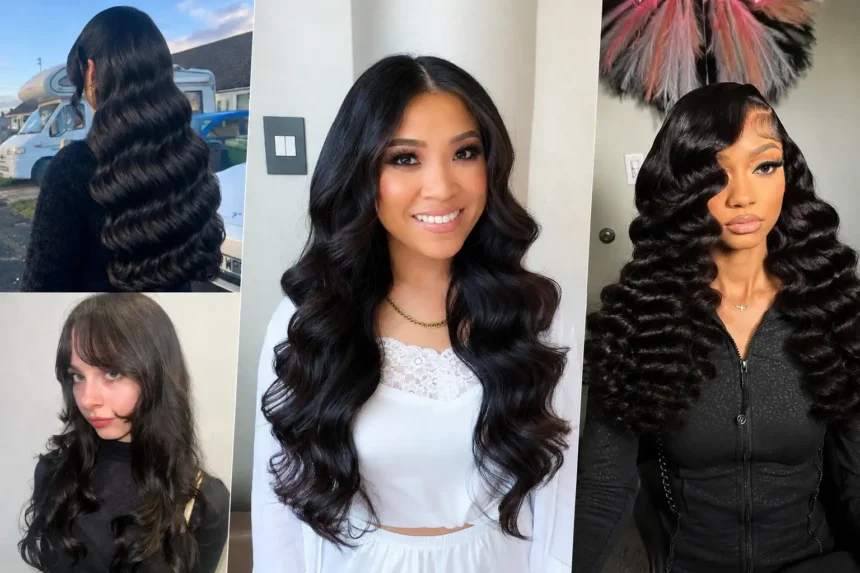
Deep brunette hair can look especially striking when movement becomes part of its shape. Curved lengths add softness, while darker color gives every bend stronger definition. Dark Waves can range from flowing waist-length texture to shorter cuts with carefully placed movement. Different finishes also create different impressions, including relaxed brunette waves, deep brown wave styles, and softly sculpted dark hair. Bangs, layers, partings, and selective highlights can further change how the waves frame the face. Careful styling keeps each variation distinct without making the texture feel overly complicated. Rich color and natural movement work together to create hairstyles that feel current, polished, and easy to recognize.
- 1. Long Dark Waves
- 2. Dark Chocolate Waves
- 3. Espresso Dark Waves
- 4. Dark Brunette Waves
- 5. Soft Dark Waves
- 6. Voluminous Dark Waves
- 7. Tousled Dark Waves
- 8. Glossy Dark Waves
- 9. Loose Dark Waves
- 10. Dark Wavy Lob
- 11. Shoulder-Length Dark Waves
- 12. Center-Parted Dark Waves
- 13. Side-Parted Dark Waves
- 14. Dark Waves Curtain Bangs
- 15. Dark Waves Side Bangs
- 16. Dark Waves Feathered Layers
- 17. Dark Waves Face-Framing Layers
- 18. Dark Waves Caramel Highlights
- 19. Dark Waves Brown Highlights
- 20. Dark Waves Face-Framing Highlights
- 21. Dark Waves Soft S-Waves
- 22. Dark Beach Waves
- 23. Dark Hollywood Waves
- 24. Dark Waves Deep Side Part
- 25. Dark Waves Half-Up Style
- Conclusion
1. Long Dark Waves
Long Dark Waves create an extended silhouette with broad movement flowing well past the shoulders. Deep brunette color gives the long strands visual weight, while the loose bends prevent the length from appearing flat. Curved sections become more noticeable toward the lower half, creating a graceful rhythm through the hair. Face-level pieces remain relatively smooth before joining the longer texture, giving the hairstyle a balanced transition from controlled roots to flowing ends.
2. Dark Chocolate Waves
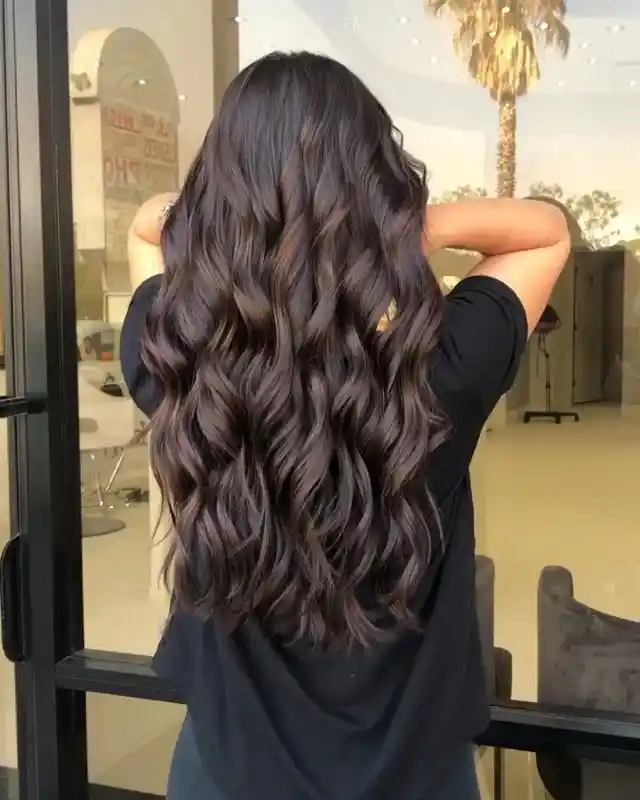
Dark Chocolate Waves use a rich brown shade that looks warmer than a near-black brunette base. Rounded waves move through the mid-lengths and create gentle changes in how light reaches the hair. Smooth sections between the bends keep the texture controlled instead of messy. Warm brown coloring also softens the visual effect of the darker shade, giving the hairstyle a dimensional finish that feels rich without relying on strong highlights or dramatic contrast.

3. Espresso Dark Waves
Espresso Dark Waves carry an almost-black brunette tone with enough brown warmth to keep the color from looking completely flat. Straighter sections near the crown transition into defined waves lower down, creating a noticeable change in texture. Curves become fuller toward the ends while the upper area stays sleek and close to the head. Deep pigmentation strengthens the contrast between light reflections and shadowed sections, giving the style a bold yet polished appearance.

4. Dark Brunette Waves
Dark Brunette Waves combine a deep brown base with relaxed bends that begin around the middle lengths. Natural-looking movement keeps the hairstyle from appearing heavily curled or overly arranged. Lighter reflections appear across selected curves, adding subtle variation without changing the overall brunette character. Straight sections near the upper portion provide structure, while softer waves below create a flowing finish that suits the long, balanced shape shown in the style.
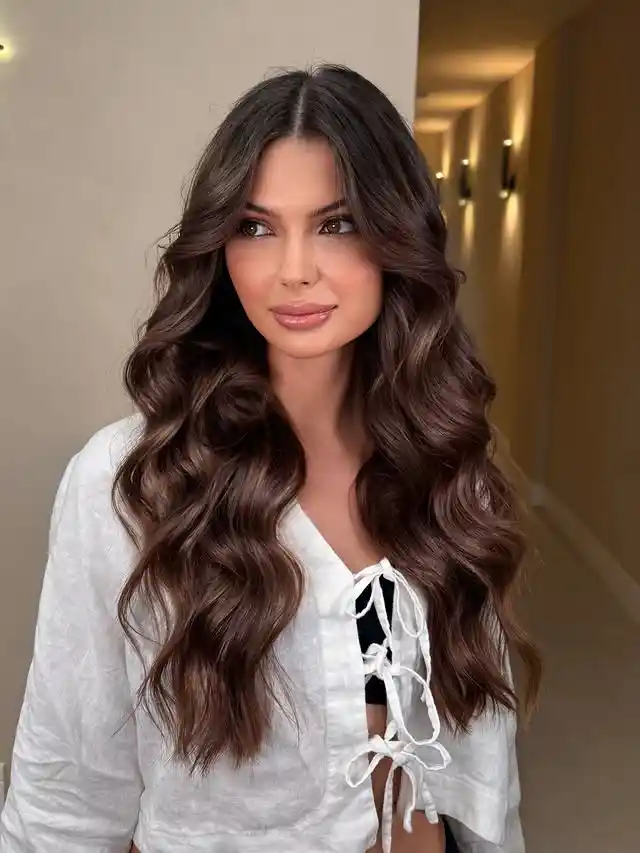
5. Soft Dark Waves
Soft Dark Waves rely on wide, gentle curves rather than firm curls. Dark hair moves gradually from smoother upper sections into loose bends, creating softness around the sides of the face. Minimal separation between strands keeps the finish neat and touchable. Lower lengths carry enough movement to add shape without creating large amounts of volume. Gentle transitions give the hairstyle an understated appearance while allowing the brunette color to remain visually prominent.
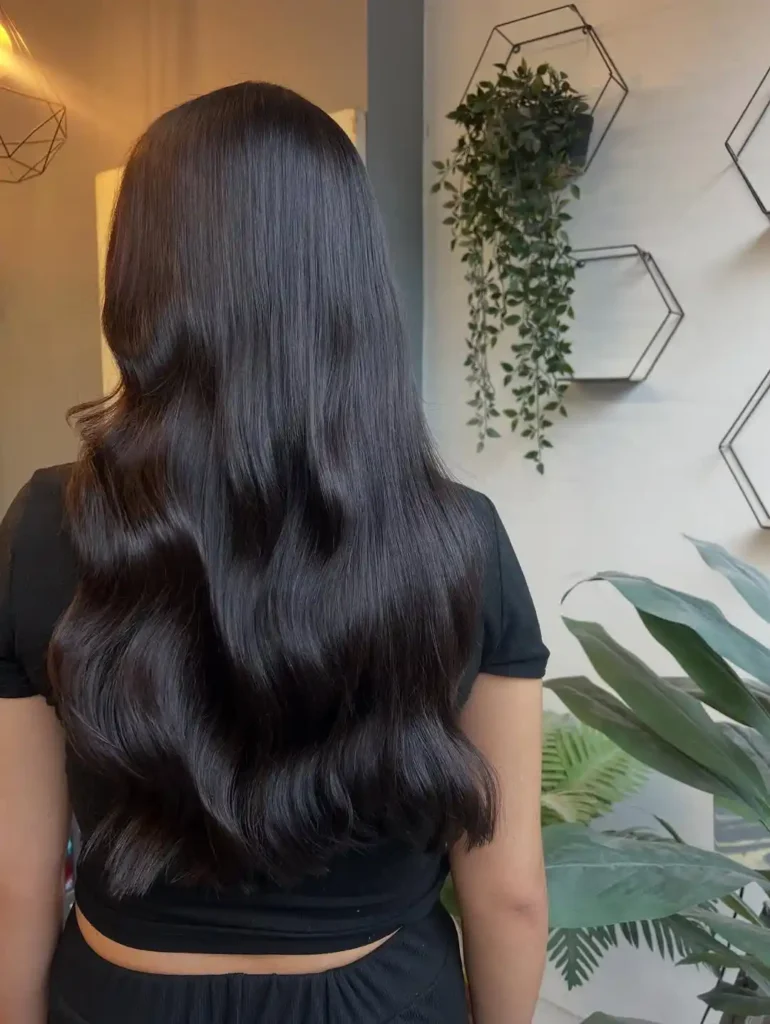
6. Voluminous Dark Waves
Voluminous Dark Waves build their shape through fuller sections across the middle and lower lengths. Root lift creates space around the crown, while large bends expand outward instead of staying close to the head. Dark brunette coloring makes overlapping strands appear deeper, which strengthens the sense of body. Rounded ends maintain a smooth finish, allowing the increased volume to look deliberate rather than bulky. Strong movement gives this version a more glamorous presence.
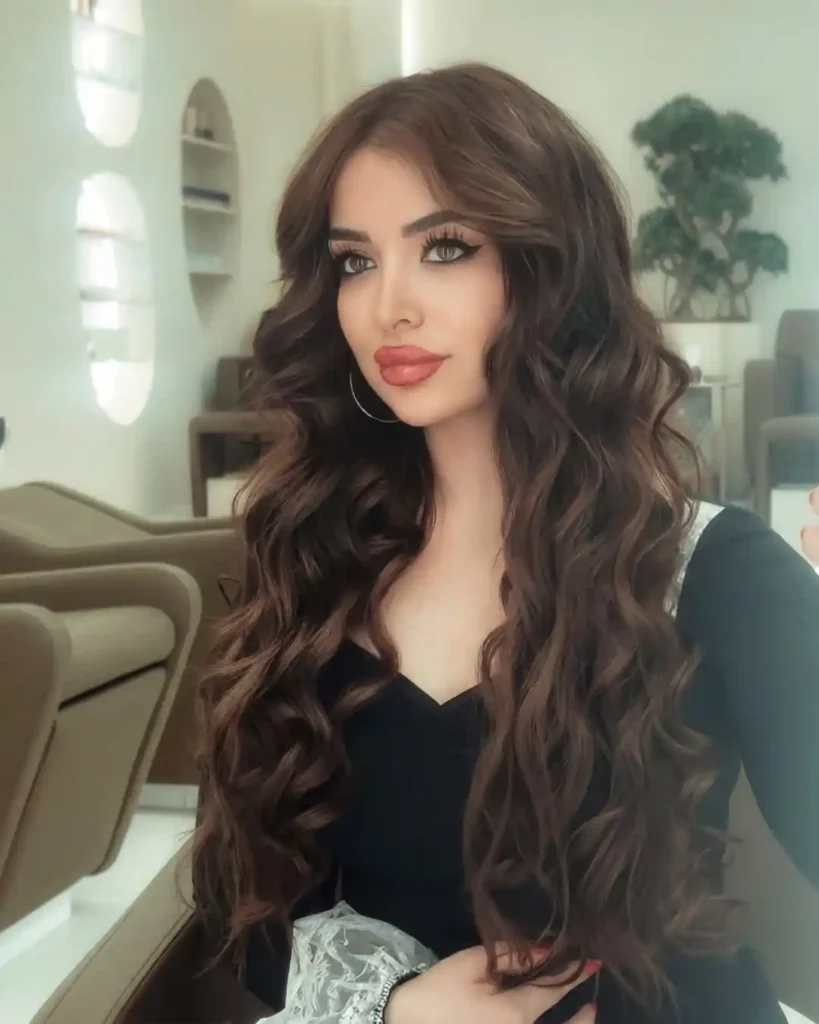
7. Tousled Dark Waves
Tousled Dark Waves use uneven bends and separated strands to create a relaxed finish. Different sections curve at slightly different points, preventing the texture from looking uniform. Deep brunette coloring adds definition between the separated pieces, making the loose texture easier to see. Some strands remain smoother while others form visible bends, creating a casual contrast across the lengths. Soft volume keeps the hairstyle airy rather than overly polished or tightly controlled.

8. Glossy Dark Waves
Glossy Dark Waves place strong emphasis on a smooth surface and visible shine. Sleek upper sections lead into carefully formed curves, allowing light to travel across the darker strands. Consistent wave placement keeps the silhouette orderly from one section to the next. Deep brunette color strengthens the reflective effect because brighter areas stand out against the darker bends. Controlled texture gives the hairstyle a sleek finish without losing the flowing shape.

9. Loose Dark Waves
Loose Dark Waves feature broad curves with plenty of straight space between individual bends. Open texture keeps more of the original length visible and avoids the compact appearance associated with tighter curls. Dark brown strands move softly around the shoulders, while separated sections add lightness through the lower lengths. Gentle wave changes create enough texture to shape the hairstyle without overwhelming its natural length or making the finish appear heavily styled.

10. Dark Wavy Lob
Dark Wavy Lob combines a shorter cut with noticeable movement through the ends. Shoulder-level length creates a clean outline, while broad waves stop the shape from looking too straight or rigid. Dark brunette color gives the shorter silhouette extra depth and makes each curved section easier to distinguish. Slightly uneven ends add softness around the perimeter, creating a modern balance between the structured lob shape and relaxed wavy texture.
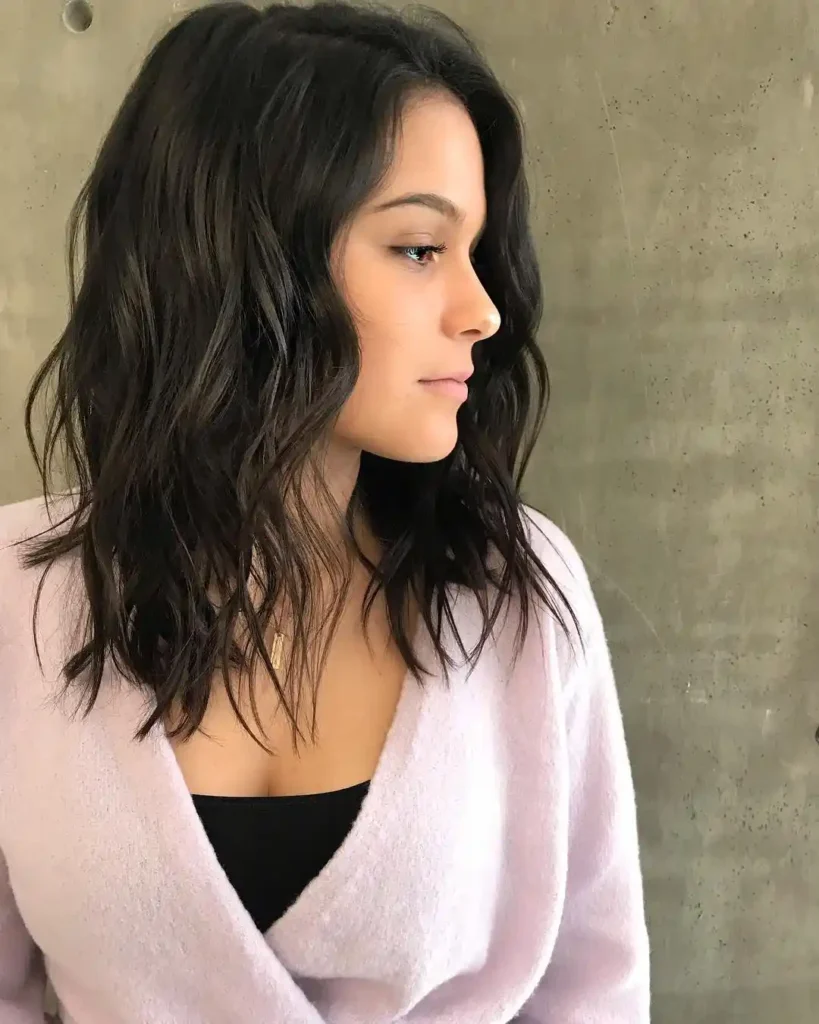
11. Shoulder-Length Dark Waves
Shoulder-Length Dark Waves keep the hair close to the shoulders while using curved texture to build movement. Mid-length waves add fullness around the sides without extending far beyond the body. Dark brunette strands create a strong base, while softer bends keep the cut from appearing severe. Ends sit around the shoulder area and follow the wave pattern naturally, giving the hairstyle a practical shape with enough texture to feel expressive.
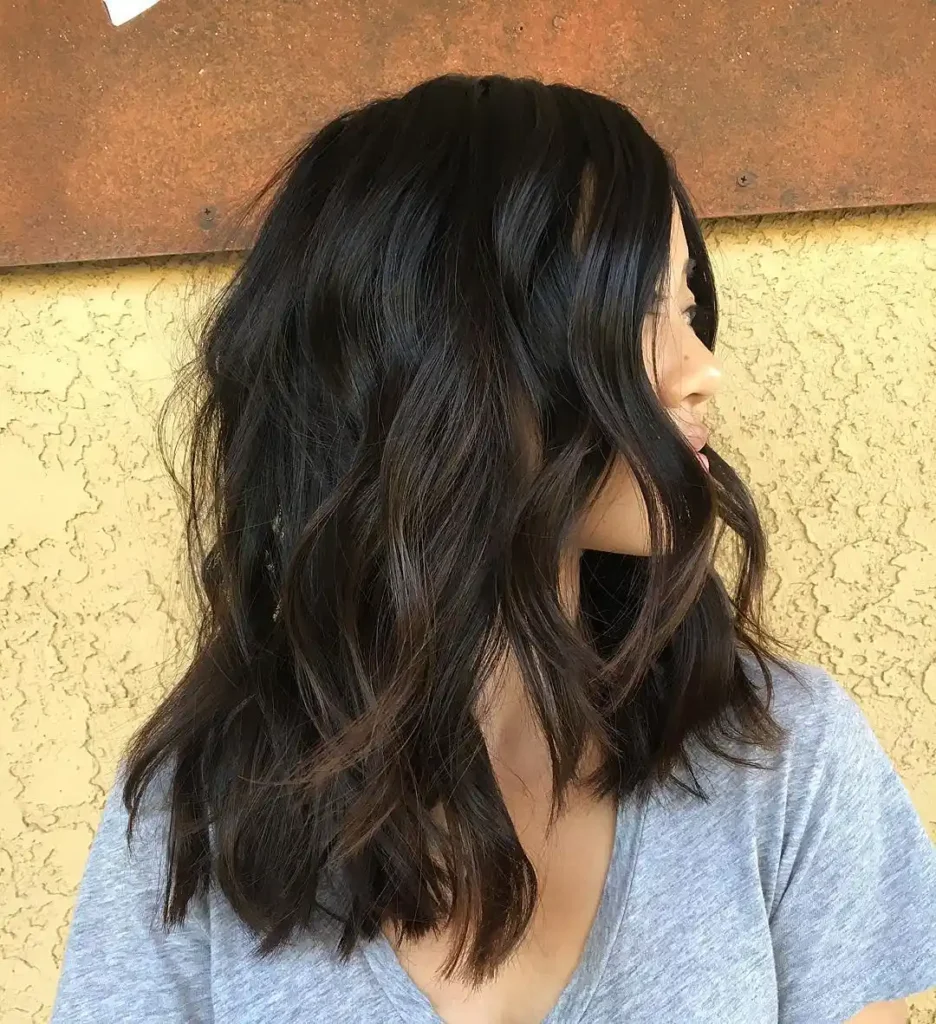
12. Center-Parted Dark Waves
Center-Parted Dark Waves divide the hair evenly before the waves fall along both sides of the face. Matching movement on either side creates visual balance, while the middle part gives the hairstyle a clear central structure. Upper strands stay relatively smooth before bending farther down, helping the face remain visible. Deep brunette coloring keeps both sides visually connected, while evenly placed waves create a calm and symmetrical finish.
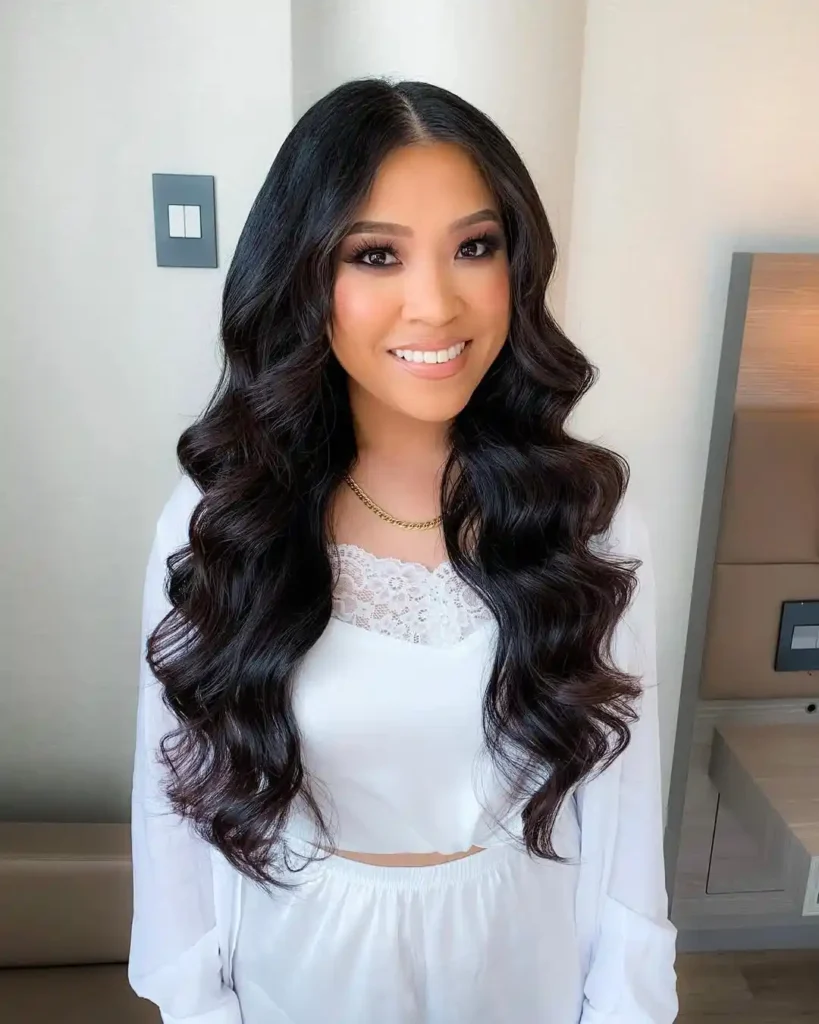
13. Side-Parted Dark Waves
Side-Parted Dark Waves move most of the hair toward one side, creating an asymmetrical shape. Extra strands gather across the fuller side, giving that section greater visual weight than the opposite side. Broad waves continue through the lengths and soften the strong direction created by the part. Deep brown coloring adds further depth across overlapping strands, while the uneven distribution gives the hairstyle a more expressive and dramatic character.
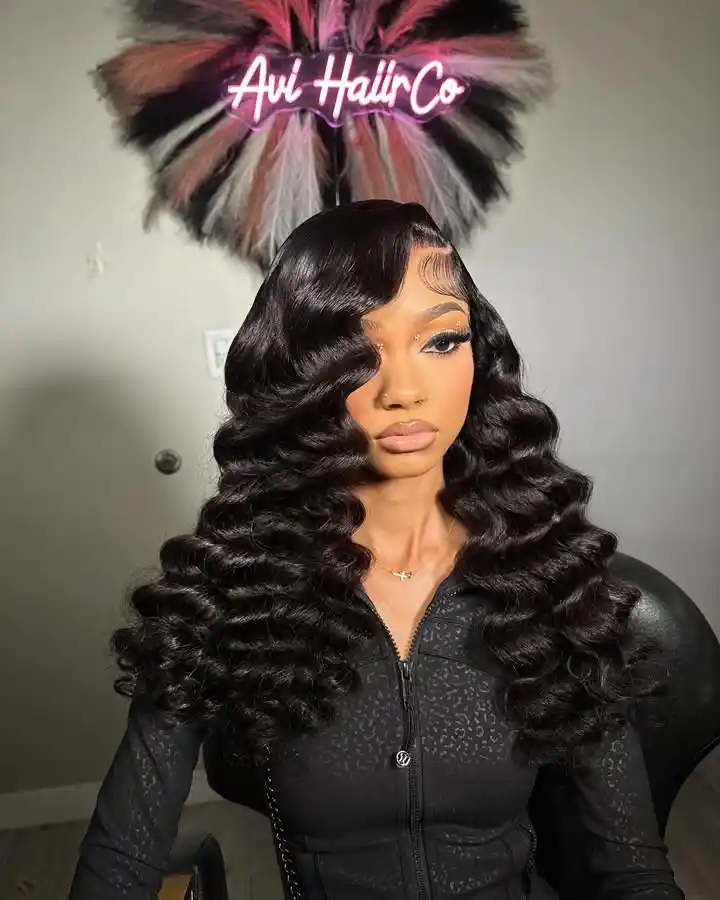
14. Dark Waves Curtain Bangs
Curtain Bangs place shorter pieces around the forehead before blending them into longer wavy sections. A central opening separates the fringe and allows both sides to curve gently away from the face. Longer front pieces create a gradual connection with the rest of the hair, avoiding a sharp break between the bangs and lengths. Deep brunette color keeps every section visually unified, while soft waves preserve the relaxed character of the style.
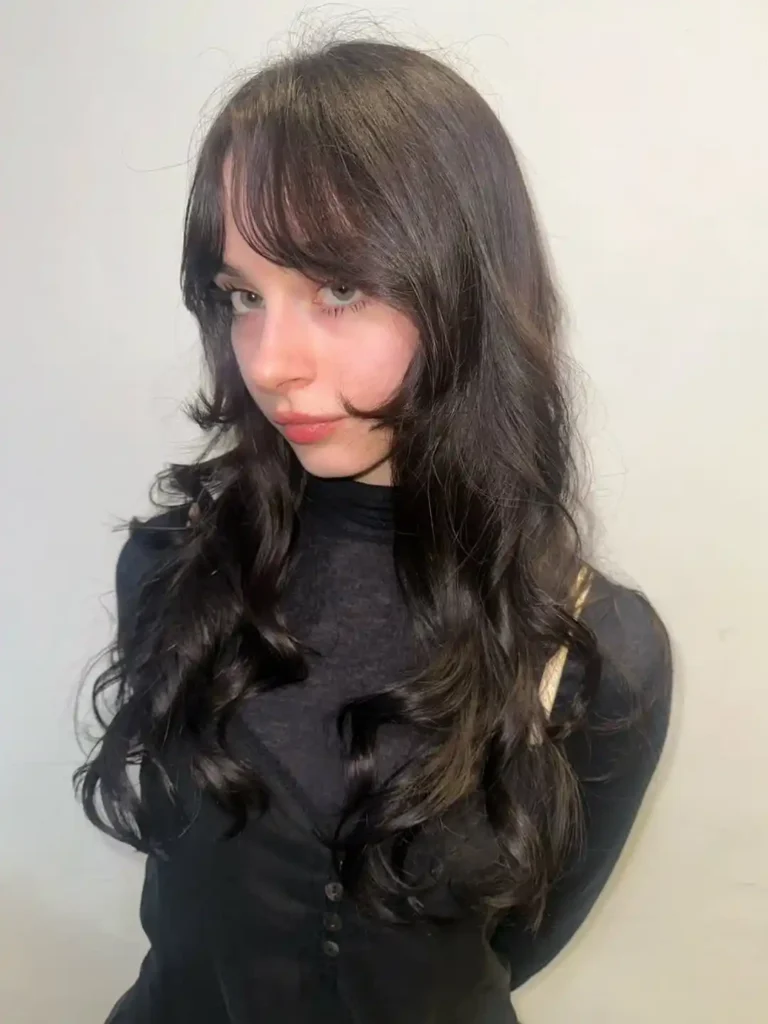
15. Dark Waves Side Bangs
Side Bangs create a directional front section that sweeps across the forehead and joins the longer waves. Angled fringe introduces a different line from the curved lengths behind it, giving the hairstyle more visual variety. Dark brown strands maintain a consistent color across the front and back. Softer bends through the lower sections balance the stronger side movement, producing a feminine shape with clear direction and controlled texture.

16. Dark Waves Feathered Layers
Feathered Layers use shorter pieces that taper softly into longer wavy sections. Feathered ends create visible separation, allowing individual layers to move independently instead of forming one heavy block. Deep brunette color adds definition between the different lengths, especially where strands overlap. Waves become lighter around the layered ends, giving the hairstyle an airy quality. Graduated movement also keeps the long shape from appearing too dense or visually heavy.
17. Dark Waves Face-Framing Layers
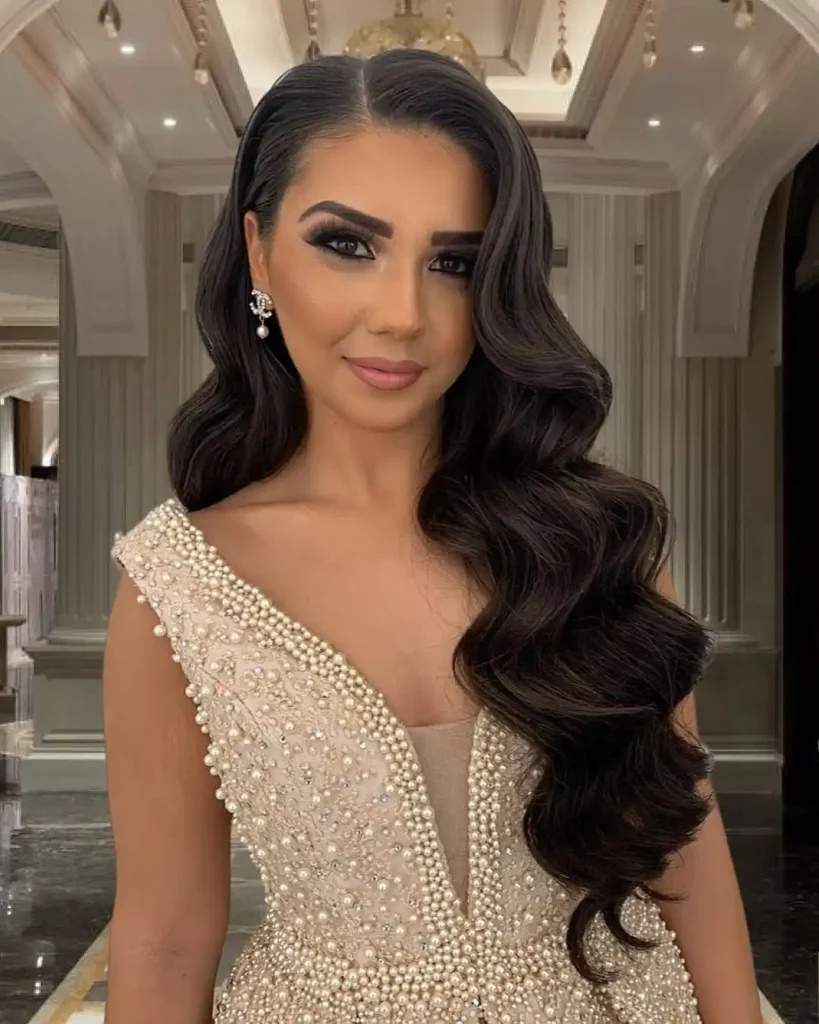
Face-Framing Layers place shorter sections around the cheeks and jaw before blending them into longer lengths. Curved front pieces follow the face while the remaining waves continue downward, creating a clear change in length around the front. Deep brunette color keeps the layers cohesive rather than making them appear disconnected. Gentle movement around the face adds definition without creating a harsh outline, giving the hairstyle a soft structured shape.
18. Dark Waves Caramel Highlights
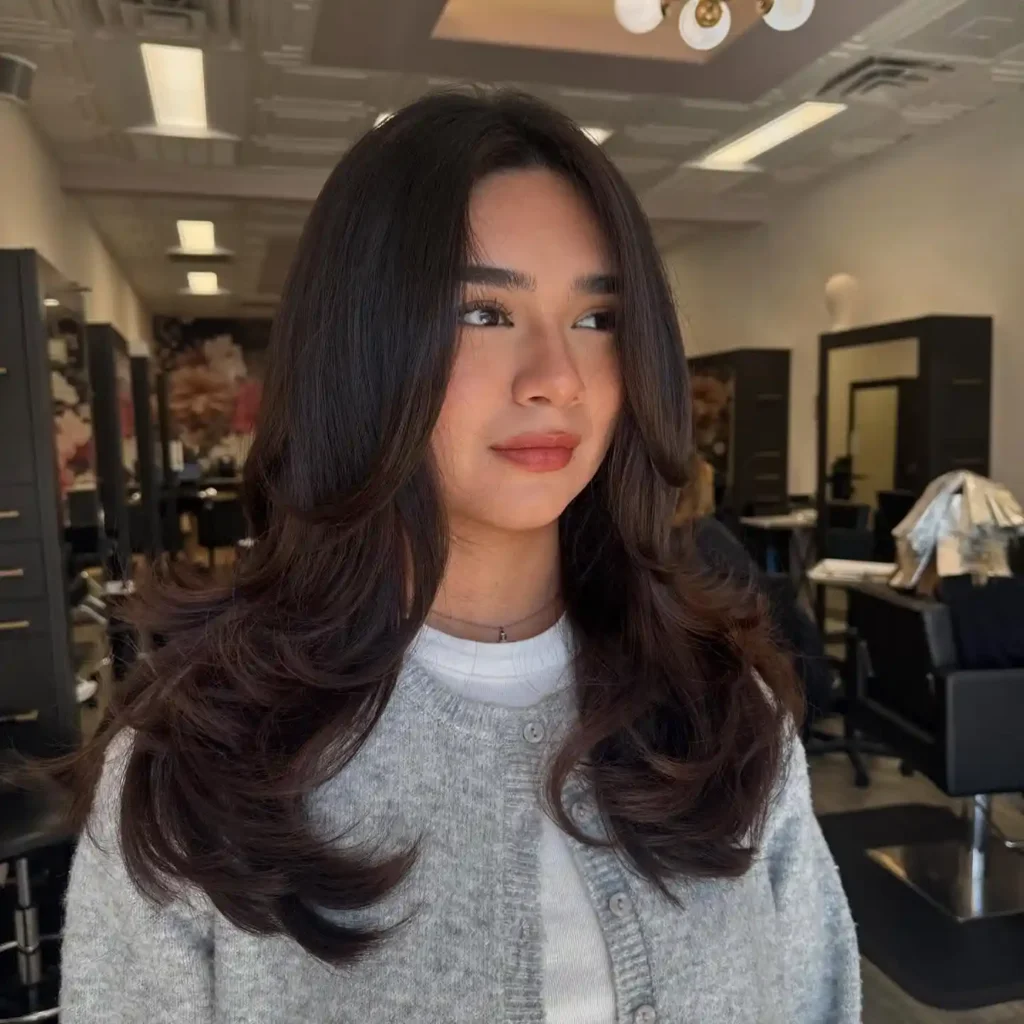
Caramel Highlights introduce warm lighter pieces into a deep brunette base. Caramel tones appear more strongly across selected waves, creating visible brightness without covering the darker foundation. Highlighted sections follow the natural movement of the hair, so color changes become softer as the waves turn. Mid-length and lower sections carry much of the contrast, giving the hairstyle added depth while preserving the rich appearance of the brunette base.
19. Dark Waves Brown Highlights
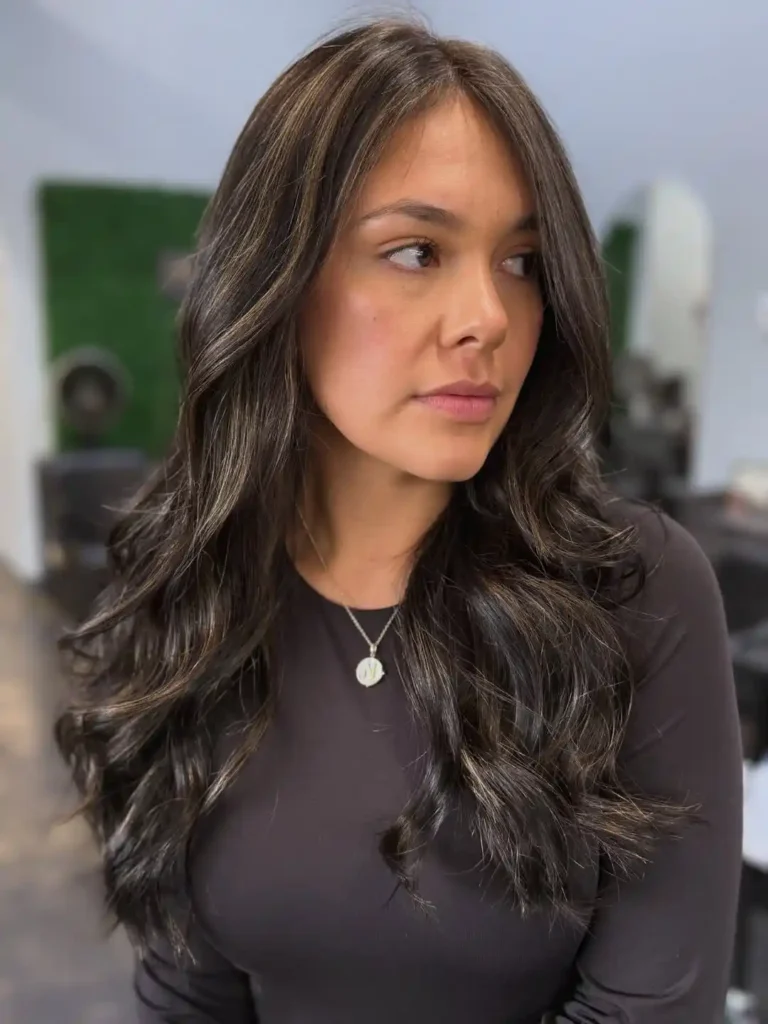
Brown Highlights stay close to the original brunette shade while adding lighter brown pieces throughout the lengths. Subtle tonal changes become visible across individual waves rather than creating sharp blocks of color. Darker strands remain between the highlighted sections, preserving depth across the hairstyle. Gentle contrast works especially well with flowing texture because each bend catches the brown tones differently. A blended finish keeps the color natural and visually balanced.
20. Dark Waves Face-Framing Highlights
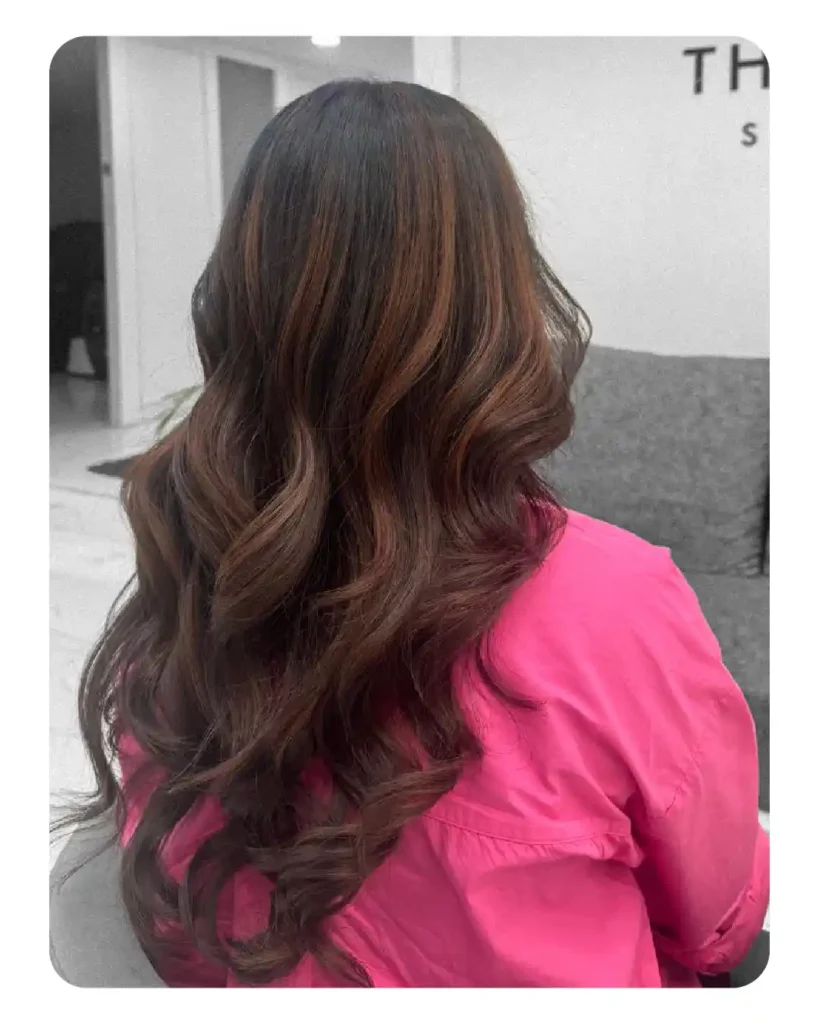
Face-Framing Highlights concentrate lighter brown tones around the front of the hairstyle. Brighter pieces near the face create separation from the darker lengths behind them, drawing attention toward the facial area. Waves help soften the transition between the lighter and deeper shades. Remaining hair stays predominantly dark, keeping the color contrast controlled. Focused brightness around the front gives the hairstyle definition without turning the entire length into a highlighted style.

21. Dark Waves Soft S-Waves
Soft S-Waves use long curves that change direction gradually through each section. Instead of forming rounded curls, the hair creates flowing bends that resemble a stretched S pattern. Smooth surfaces make the wave shape easy to see, while the deep brunette color strengthens its outline. Consistent spacing between the curves gives the hairstyle a polished rhythm. Extended movement keeps the finish sleek while adding enough texture to avoid a flat appearance.

22. Dark Beach Waves
Dark Beach Waves combine loose texture with separated strands and irregular bends. Individual sections move in slightly different directions, creating the relaxed quality associated with beach-inspired hair. Deep brunette color gives the undone texture more definition, especially where strands overlap or separate. Lower lengths retain a light appearance instead of forming dense curls. Casual movement and darker coloring create an easy contrast between relaxed texture and a more polished brunette finish.
23. Dark Hollywood Waves
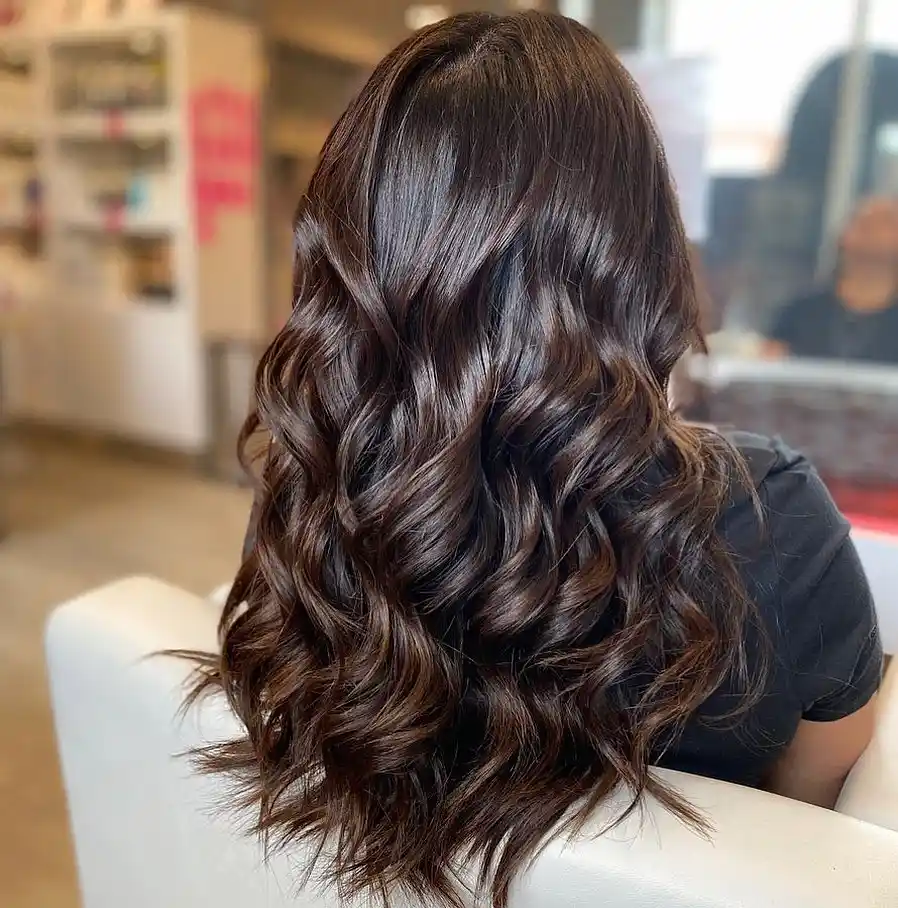
Dark Hollywood Waves use repeated, sculpted curves that follow a clear pattern from one side to the other. Smooth surfaces and close wave placement create a highly controlled shape, while the deep brunette shade adds dramatic depth. Each bend connects closely with the next, producing a continuous flowing effect through the lengths. Strong definition gives the hairstyle a classic evening character, with polished texture taking priority over loose or casual movement.

24. Dark Waves Deep Side Part
Deep Side Part creates a strong directional shape by placing the part well away from the center. Most of the hair falls toward one side, producing greater fullness across that section. Broad waves add movement without disrupting the pronounced parting. Dark brunette coloring emphasizes the layered strands where they overlap, creating extra depth. Smooth roots provide structure before the hair opens into fuller curves through the lower lengths.

25. Dark Waves Half-Up Style
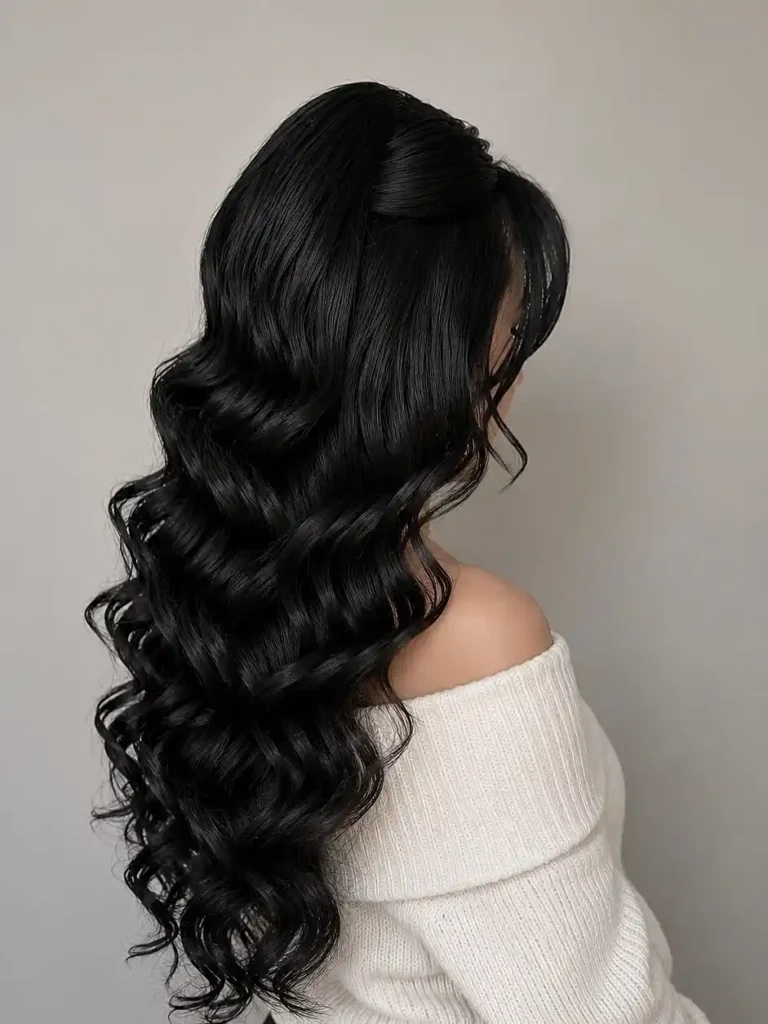
Half-Up Style combines flowing texture with a gathered upper section. Hair from the crown and sides is lifted away from the face, while the remaining lengths fall freely in broad waves. Separation between the secured upper portion and loose lower hair creates useful visual contrast. Dark brunette coloring keeps both sections connected, while the open waves preserve movement. A partially raised shape gives the hairstyle a graceful finish without removing its natural texture.
Conclusion
Rich brunette tones can take on very different personalities when wave placement, length, and shape change. Dark Waves can move from relaxed brunette wave hairstyles to sculpted deep brunette curls and softly layered dark hair waves. Partings and face-framing details can alter the balance, while selective highlights introduce controlled brightness. Shorter cuts bring structure, whereas longer lengths create more flowing movement. Strong color depth remains the common thread, helping every variation maintain definition while expressing a distinct hairstyle character.